#1 Overall Winner
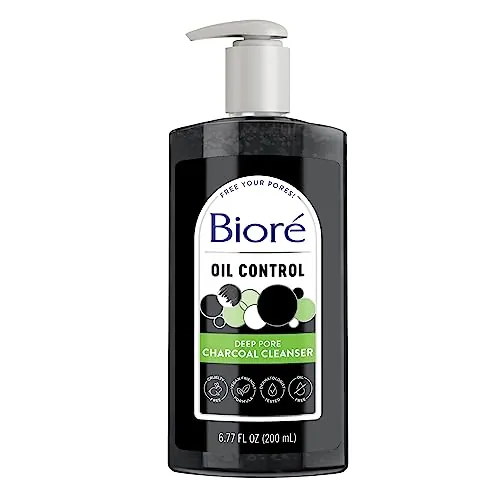
Biore Deep Pore Charcoal Face Wash
- Strong deep-cleansing and oil-removal performance for oily skin.
Comparison
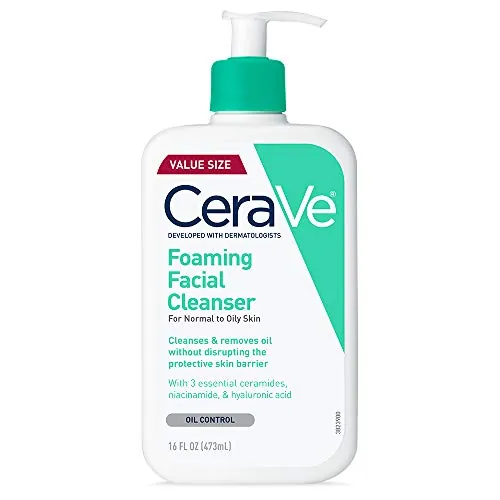
Biore Deep Pore Charcoal Face Wash and CeraVe Foaming Facial Cleanser are foaming options for removing oil, dirt, and everyday buildup. Biore offers a lower-cost, cooling deep-clean experience aimed at oily skin, while CeraVe takes a fragrance-free, non-drying approach for normal to oily skin. CeraVe leads the supplied overall scoring, especially for skin compatibility and comfort. Biore may still suit users who enjoy a more pronounced fresh, tingly cleanse and can tolerate it well.
#1 Overall Winner
Contender
Choose CeraVe for a fragrance-free, high-scoring everyday cleanser that removes oil without commonly reported tightness. Choose Biore if you have oily skin, want a lower-cost charcoal cleanser, and enjoy a cooling, very clean finish. For users concerned about dryness or sensitivity, the supplied data favours CeraVe.
Overall winner
Depends on your needs
| Feature | Biore Deep Pore Charcoal Face Wash | CeraVe Foaming Facial Cleanser | Winner |
|---|---|---|---|
| Overall score | 81 | 89 | CeraVe Foaming Facial Cleanser |
| Primary skin fit | Oily skin | Normal to oily skin | Depends |
| Effectiveness | 86 | 90 | CeraVe Foaming Facial Cleanser |
| Skin compatibility | 66 | 93 | CeraVe Foaming Facial Cleanser |
| Ingredient profile | Charcoal; sodium laureth listed | Ceramides, hyaluronic acid, niacinamide | CeraVe Foaming Facial Cleanser |
| Sensory profile | Cooling or minty sensation reported | Fragrance-free; light foam | Depends |
| Ease of use | 87 | 90 | CeraVe Foaming Facial Cleanser |
| Pack size | 6.77 oz | 16 fl oz | CeraVe Foaming Facial Cleanser |
| Upfront price | $6.87 | $15.97 | Biore Deep Pore Charcoal Face Wash |
| Value score | 88 | 90 | CeraVe Foaming Facial Cleanser |
| Customer satisfaction | 92; 4.6/5 from 29,697 reviews | 96; 4.8/5 from 75,327 reviews | CeraVe Foaming Facial Cleanser |
| Heavy makeup limitation | No specific evidence provided | May struggle with heavy waterproof mascara or mineral sunscreen | Depends |
Both cleansers perform well for their main purpose of removing oil, dirt, and everyday buildup, with Biore scoring 86 and CeraVe scoring 90 for effectiveness. Biore's reviews repeatedly praise its deep-cleaning feel and help with facial oil, while its charcoal positioning is central to the product description. CeraVe earns the edge through consistent feedback that it cleanses excess oil without leaving skin tight or stripped, alongside its gel-to-foam format and normal-to-oily skin fit. One practical CeraVe limitation is that heavy waterproof mascara or stubborn mineral sunscreen may need a separate first cleanse. Neither product should be judged on skincare outcomes beyond cleansing based on these data.
For the immediate cosmetic result, Biore is associated with a squeaky-clean, refreshed, sometimes tingly finish that may appeal to users who want to feel oil thoroughly removed. CeraVe is more often described as leaving skin clean, smooth, balanced, and free of tightness. Its stronger beauty-result and finish-quality scores suggest a more consistently comfortable, polished post-cleanse appearance. The preference depends on whether you value Biore's pronounced fresh-clean sensation or CeraVe's more balanced finish.
CeraVe leads in beauty-result score, 85 versus Biore's 78. Buyer feedback associates CeraVe with smooth, balanced, refreshed-looking skin without a greasy residue or a tight after-feel. Biore can provide a visibly clean, fresh appearance and some buyers mention a glow, but the stronger cooling and potentially drying experience may not create the same result for every user. For a consistent everyday post-cleanse appearance, the score data favours CeraVe; for a more assertive clean sensation, Biore remains appealing.
Both products fit an oil-control cleansing step, but they take different skincare approaches. Biore is directed at oily skin and highlights charcoal-led pore cleansing, whereas CeraVe is listed for normal to oily skin and combines cleansing with a formula featuring ceramides, hyaluronic acid, and niacinamide. CeraVe is also stated to be fragrance-free, non-comedogenic, non-drying, and non-irritating, though individual skin responses can differ. Biore's review feedback is more divided on dryness and irritation, so its fit may be narrower for routine daily use.
CeraVe has the higher safety score, 91 compared with Biore's 67. Its listing describes a fragrance-free, non-drying, non-irritating cleanser, and reviews generally support a gentle daily-use experience; however, isolated reports of breakouts show that reactions remain possible. Biore is dermatologist tested according to its listing, but customer feedback includes mixed reports ranging from no irritation to redness and severe reactions. Because both products are facial cleansers, avoid eye contact, discontinue use if an adverse reaction occurs, and consider a patch test when trying a new formula. Product claims and user reviews are not substitutes for individual professional advice.
CeraVe scores 92 for comfort, well above Biore's 72. Its lightweight foam, fragrance-free positioning, and lack of a commonly reported tight after-feel make it better suited to frequent use for many reviewers. Biore offers a different comfort profile: many enjoy its cool, tingly, refreshed sensation, but others find that same sensation too strong or drying, especially in colder weather. CeraVe is the more consistently comfortable choice; Biore is preference-led.
Both cleansers are easy to incorporate into a routine, with scores of 87 for Biore and 90 for CeraVe. Biore foams readily, rinses easily, and reviewers say a small amount goes far. CeraVe's pump delivers a controlled amount, transforms from gel to light foam with water, and is described as convenient for morning and evening use. Its large size can require more counter space, and one review notes that the pump's opening instructions may be hard to read initially. Overall, CeraVe has a narrow usability lead.
CeraVe scores 89 for application versus Biore's 80. Its clear gel is designed to become a lightweight foam, and reviews consistently mention easy rinsing and no sticky or greasy residue. Biore also lathers and rinses well, with a thicker texture noted by some users and positive feedback for its spreadability. The difference is sensory: Biore's cooling tingle can feel invigorating or too intense, while CeraVe's gentler foam is likely to be easier to use consistently in a daily routine.
CeraVe has a clear skin-compatibility advantage at 93 compared with Biore's 66. It is described as fragrance-free and non-drying, and many reviews report a gentle feel with normal, oily, or combination skin. A minority of buyers still report breakouts, so a universally problem-free result cannot be assumed. Biore is explicitly intended for oily skin, but the supplied reviews include both positive tolerance experiences and reports of severe reactions, redness, and dryness. The tingly sensation may also be unwelcome for some users. Patch testing and introducing either product gradually are sensible when skin is reactive.
CeraVe scores 82 for finish quality, ahead of Biore at 72. Its light foam is commonly described as rinsing without residue, leaving skin clean and balanced rather than tight. Biore's finish is more intense: reviews highlight a squeaky-clean, cooling, minty-feeling result. That can be satisfying for oily skin, but some users find it drying or uncomfortable. CeraVe is the stronger choice for a soft, non-stripped post-wash finish, while Biore is for those who prefer a sharper refreshed sensation.
For a rinse-off cleanser, longevity mainly reflects how well the product remains practical and satisfying over repeated use rather than hours of wear. CeraVe scores 78 versus Biore's 62, helped by its larger 16-fluid-ounce pump format and repeated reviews that a small amount lasts a long time. Biore's 6.77-ounce bottle also appears economical because users say little is needed, but it contains less product. Results can vary with washing frequency and the amount dispensed.
CeraVe has the higher scent score, 86 versus Biore's 70, largely because it is described as fragrance-free. Biore is specified as unscented, yet multiple reviews mention a minty or cooling scent and sensation. Some buyers enjoy this fresh profile, while others dislike it. For users seeking the least noticeable scent experience, the supplied information favours CeraVe.
CeraVe scores 88 for durability compared with Biore's 74. As consumable cleansers, this category is most relevant to how long the bottle remains practical in normal use. CeraVe's larger 16-fluid-ounce format and controlled pump help support longer use between replacements. Biore's smaller bottle is still described as economical because only a small amount is needed. Neither provided dataset identifies a consistent leakage, drying-out, or stability issue, so the score difference mainly reflects CeraVe's format and overall usability.
CeraVe has the higher personalization score, 72 versus Biore's 55, chiefly because it is listed for normal to oily skin and can be used on the face, body, or hands. Its fragrance-free format may also better fit users who avoid noticeable fragrance. Biore is more narrowly tailored to oily facial skin and a charcoal-driven, cooling cleanse. Neither product provides shade choices, device settings, or multiple finish options, so the practical choice is mainly about skin type, preferred sensory feel, and tolerance.
CeraVe leads ingredient quality, 88 to Biore's 58, based on the provided scoring and listed formula information. CeraVe identifies ceramides, hyaluronic acid, and niacinamide and is described as fragrance-free. These details support its positioning as a cleanser intended to remove oil without a stripped feel, but they do not guarantee the same experience for every person. Biore identifies natural charcoal in its description and sodium laureth in its specifications, with the emphasis on oil and impurity removal. The supplied data does not provide a full ingredient list for either cleanser, so this is not a complete formulation assessment.
CeraVe leads packaging quality, 84 to Biore's 72. Its 16-fluid-ounce pump is frequently described as hygienic, practical, and able to dispense an appropriate amount, although the bottle takes more counter space and the pump markings may initially be unclear. Biore comes in a smaller bottle and users report that a little product goes a long way. The available feedback does not identify a major Biore packaging fault, but CeraVe's pump format receives more specific praise for daily convenience.
Biore has the lower upfront price at $6.87, compared with $15.97 for CeraVe, which can make it the easier low-cost trial. However, CeraVe earns the slightly higher value score, 90 versus 88, and its 16-fluid-ounce bottle contains much more product than Biore's 6.77 ounces. Reviews for both mention that a small amount is effective. CeraVe's stronger compatibility, comfort, and customer-satisfaction scores add to its longer-term value proposition. Biore is better for minimising the initial spend; CeraVe is better value if its gentler daily-use profile matches your skin and the larger size will be used.
CeraVe has a higher brand-trust score, 87 compared with Biore's 71. Its listing states that the formula was developed with dermatologists, and its product details, key ingredients, and routine-focused directions are clearly presented. Biore also provides a defined oily-skin cleanser proposition and is manufactured by Kao USA Inc., but the available data gives it a lower trust score. This comparison reflects the supplied scoring and information, not an independent assessment of either brand's complete product range.
Both products have very strong buyer feedback, but CeraVe leads customer satisfaction with a score of 96, a 4.8/5 rating, and 75,327 reviews. Recurring praise includes gentle oil cleansing, a non-tight finish, easy rinsing, and a useful pump bottle. Biore also performs strongly at 92, with a 4.6/5 rating from 29,697 reviews. Buyers frequently praise deep cleaning, oil control, and good price-to-size value. The key difference is consistency: Biore has more notable reports of dryness, redness, reactions, and dislike of the cooling sensation.
CeraVe scores 90 for claim support, ahead of Biore at 78. Its stated benefits align with the listed gel-to-foam format, fragrance-free positioning, named key ingredients, and reviews describing oil removal without a dry or tight feel. Its claims about being non-drying or non-irritating should still be read as product claims, not guarantees for every user. Biore's cleansing and oil-removal focus is supported by its charcoal-based product information and frequent buyer reports of a clean, refreshed feel. However, its stronger pore-purifying and deep-cleaning marketing language should be weighed against mixed tolerance feedback.
CeraVe Foaming Facial Cleanser is the clearer overall winner. It has the higher overall score and leads across effectiveness, skin compatibility, ingredients, safety, comfort, packaging, value, and customer satisfaction. Its key strength is reliable daily cleansing for normal to oily skin without the commonly reported stripped feeling. Its main limitation is that it may not fully remove heavy waterproof makeup or stubborn mineral sunscreen on its own.
Biore Deep Pore Charcoal Face Wash is still a good lower-cost alternative for oily skin users who want a charcoal-led, cooling deep-clean experience. Its strengths are oil removal, easy lathering, and upfront affordability. Its main limitation is less consistent skin tolerance, with dryness and irritation concerns in the supplied feedback. For most routines, CeraVe is the more balanced choice.

Overall winner
Depends on your needs
CeraVe is the stronger overall choice in the provided score data, particularly for skin compatibility, safety, comfort, ingredients, and daily-use value. Biore remains a practical choice for oily skin users who prefer a more intensive, cooling clean at a lower upfront price, but its tolerance feedback is more mixed.
Both products are intended to remove excess oil. Biore is specifically positioned for oily skin and has strong deep-cleansing feedback. CeraVe is listed for normal to oily skin and has the higher effectiveness score, with reviews often noting oil control without a tight or stripped after-feel.
CeraVe appears more suitable based on its higher skin-compatibility and safety scores, fragrance-free positioning, and repeated buyer comments about a gentle, non-drying feel. Individual reactions can still vary. Biore has mixed review feedback on irritation, redness, dryness, and its noticeable cooling sensation.
Both listings state that they can remove makeup or daily buildup, but neither should be assumed to remove every makeup formula equally. CeraVe reviews specifically note that heavy waterproof mascara and stubborn mineral sunscreen may need an additional removal step. No equivalent detailed limitation was provided for Biore.
CeraVe has a modest edge for beginners because its large pump bottle, light foam, and daily-use positioning reduce routine friction. Biore is also simple to use and lathers readily, but its stronger cooling sensation and mixed dryness feedback may require more attention to frequency and skin response.
CeraVe has the slightly higher value score and provides 16 fluid ounces, while Biore has a much lower upfront price for 6.77 ounces. Choose Biore for the smaller initial spend and CeraVe if a larger, fragrance-free daily cleanser and stronger overall score profile better match your routine.
Biore uses a charcoal-focused deep-cleansing approach aimed at oily skin and is known in reviews for a tingly, minty-feeling wash. CeraVe is a fragrance-free foaming cleanser for normal to oily skin that lists ceramides, hyaluronic acid, and niacinamide and is positioned around cleansing without a dry feel.
CeraVe has the higher claim-support score, supported by its detailed ingredient listing, product specifications, and consistently aligned buyer feedback on gentle oil cleansing. Biore also has solid support for its cleansing and oil-removal focus, but its claims should be considered alongside mixed reports of dryness and irritation.
Check our rankings and expert guides to find the best beauty products for your goals.