
#1 Overall Winner
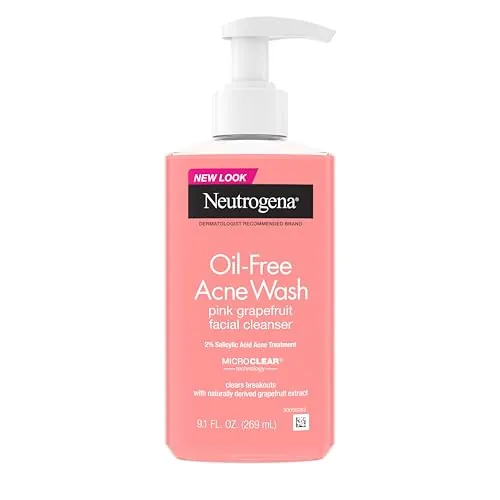
Neutrogena Oil-Free Acne Wash Pink Grapefruit Facial Cleanser
- Uses salicylic acid and is positioned for oily, acne-prone skin.
Comparison
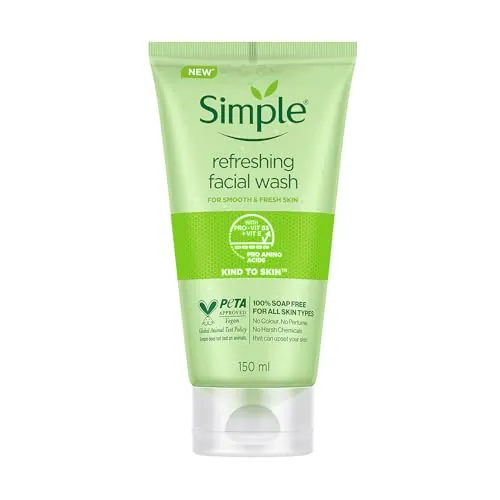
Neutrogena Pink Grapefruit Acne Wash is an oil-free salicylic-acid cleanser designed around oily, acne-prone skin, while Simple Refreshing Facial Wash Gel is a gentler everyday gel cleanser. Neutrogena has a small effectiveness advantage, but Simple performs much better for skin compatibility, safety, comfort, and overall score.
#1 Overall Winner
Contender
Choose Simple for a comfortable, gentle daily cleanser, particularly if sensitivity or dryness is a concern. Choose Neutrogena if you have oily, acne-prone skin and specifically want a salicylic-acid wash. Neutrogena is more targeted, but Simple is the more broadly skin-compatible option in the available data.
Overall winner
Depends on your needs
| Feature | Neutrogena Oil-Free Acne Wash Pink Grapefruit Facial Cleanser | Simple Kind to Skin Refreshing Facial Wash Gel | Winner |
|---|---|---|---|
| Category | Salicylic-acid facial cleanser | Refreshing facial wash gel | Depends |
| Listed skin type | Oily | Normal | Depends |
| Overall score | 82 | 84 | Simple Kind to Skin Refreshing Facial Wash Gel |
| Effectiveness | 84 | 82 | Neutrogena Oil-Free Acne Wash Pink Grapefruit Facial Cleanser |
| Skin compatibility | 62 | 90 | Simple Kind to Skin Refreshing Facial Wash Gel |
| Comfort | 64 | 91 | Simple Kind to Skin Refreshing Facial Wash Gel |
| Ease of use | 89 | 93 | Simple Kind to Skin Refreshing Facial Wash Gel |
| Value | 88 | 90 | Simple Kind to Skin Refreshing Facial Wash Gel |
| Packaging quality | 84 | 74 | Neutrogena Oil-Free Acne Wash Pink Grapefruit Facial Cleanser |
| Customer satisfaction | 91 | 92 | Simple Kind to Skin Refreshing Facial Wash Gel |
| Main concern | Dryness and sensitivity reports | Limited makeup removal | Depends |
| Size | 9.1 fl oz | 150 ml / 5 oz | Neutrogena Oil-Free Acne Wash Pink Grapefruit Facial Cleanser |
Neutrogena leads slightly for effectiveness, scoring 84 against Simple's 82. That difference fits the product formats: Neutrogena contains listed salicylic acid and is designed for oily, acne-prone skin, with many reviewers saying it helps them manage excess oil and breakouts. These experiences are not a guarantee of results, and reports of irritation can limit how consistently it works for some people. Simple is highly effective as a gentle daily wash according to its reviews, but it is not presented as an acne-focused cleanser. A review also notes limited makeup-removal performance, which may reduce its usefulness for heavier cleansing needs.
Both products score 80 for beauty results, so neither has a clear advantage in the visible post-cleanse result. Neutrogena is more likely to suit users who want a thoroughly cleansed, less oily-feeling finish, but some reviews describe a tight or rough after-feel that may detract from the result. Simple is more often associated with skin looking and feeling refreshed, smooth, and moisturised. For a balanced, comfortable-looking finish, Simple has the more consistent review pattern; for an oil-focused clean, Neutrogena is the more targeted option.
The beauty-result scores are tied at 80, indicating comparable overall visible results but different paths to them. Neutrogena's deep-cleaning, oil-focused approach can leave skin feeling very clean and refreshed; for some users, however, that effect becomes tightness or dryness. Simple's reviews more consistently mention skin feeling smooth, clean, hydrated, and refreshed without redness. If the desired result is a comfortable, balanced post-wash appearance, Simple has the more favourable supporting feedback. If reducing a greasy surface feel is the priority, Neutrogena may fit better.
Both are facial cleansers intended for routine skincare, but they occupy different roles. Neutrogena is a salicylic-acid, oil-free cleanser aimed at oily and acne-prone skin, whereas Simple is a basic refreshing gel wash with a gentler listed profile. Neutrogena may suit an active-focused routine, while Simple is better aligned with a comfort-first cleansing step before moisturiser. Neither listing provides enough information to predict an individual skin response, so introduce any new cleanser gradually and follow its label directions.
Simple leads on safety, scoring 89 compared with Neutrogena's 65. Its hypoallergenic and non-comedogenic listing claims, alongside many reports of low irritation, support its suitability as a gentler option, although individual reactions remain possible. Neutrogena's lower score reflects supplied feedback describing dryness, redness, burning, and sensitivity reactions for some users. Because Neutrogena contains salicylic acid, users should read the label, avoid the eye area, and discontinue use if it causes discomfort. A patch test can be a sensible precaution for either product, especially with reactive skin.
Simple has a substantial comfort lead, 91 versus Neutrogena's 64. Reviews regularly describe Simple as non-stripping, refreshing, and comfortable, with several users specifically preferring it for sensitive skin. Neutrogena's grapefruit scent and very clean feeling are positives for some, but the same stronger cleansing profile is associated with reports of tightness, dryness, roughness, and irritation for others. For a low-friction daily cleansing experience, Simple is the clearer choice. Neutrogena is better reserved for users who tolerate it comfortably.
Both products are easy rinse-off cleansers, but Simple scores 93 for ease of use against Neutrogena's 89. Simple reviewers say a small amount lathers readily, which can make daily use straightforward. Neutrogena's application is also simple: apply to wet skin, massage, and rinse; its pump bottle receives positive convenience feedback. The practical distinction is routine comfort rather than technique. Simple is likely easier to keep using consistently for users who find active cleansers drying, while Neutrogena offers a more targeted wash step.
Simple has a narrow application advantage, 88 versus Neutrogena's 85. The gel is frequently described as lightweight, easy to lather, and effective with a small amount. Neutrogena is also easy to massage and rinse, and users appreciate its smooth, fresh cleansing feel. The main difference is after-application experience: Simple is more often described as leaving skin comfortable, whereas Neutrogena can feel too strong for some users. Neither product is complicated to apply, so skin response is more decisive than application method.
Simple has a clear skin-compatibility advantage, scoring 90 compared with Neutrogena's 62. Its listing includes hypoallergenic and non-comedogenic claims, and many reviewers describe it as gentle, including those who identify as having sensitive skin. A small number still report dryness, so compatibility is never universal. Neutrogena is listed for oily skin, but its reviews and aggregated overview include recurring reports of tightness, dryness, redness, burning, and reactions. Its stronger active-cleansing focus may make it less suitable for users who already know their skin is easily unsettled.
Simple has the higher finish-quality score, 82 versus Neutrogena's 78. For cleansers, finish mainly refers to the skin feel after rinsing. Simple receives frequent feedback for leaving skin refreshed, soft, or moisturised without an overly stripped sensation. Neutrogena delivers the crisper, deeper-clean feeling many oily-skin users seek, but its feedback is less consistent because some users report roughness, tightness, or dryness after use. Choose Simple for a more comfortable everyday finish and Neutrogena for a more assertive oil-cleansing feel.
Simple has a slight longevity lead at 72 compared with Neutrogena's 70. For rinse-off cleansers, this score is best understood as how well the product remains practical and satisfying through repeated routine use rather than a lasting cosmetic effect. Simple reviews often mention that a small amount goes a long way and that the bottle lasts. Neutrogena's larger bottle can also support extended use, but its drying potential may affect whether users can comfortably maintain frequent use.
Simple scores 82 for scent compared with Neutrogena's 77. Neutrogena has a clearly listed grapefruit scent that many reviewers find fresh and pleasant, but scented skincare may not suit every preference. Simple's specifications state Aloe Vera as the scent name, while several reviews describe little or no scent; the available information is therefore inconsistent. Users who enjoy citrus may prefer Neutrogena, while those seeking a subdued scent experience may lean toward Simple after checking the exact pack label.
Simple leads for durability at 81 compared with Neutrogena's 72. For these consumable cleansers, this is more relevant to continued usability and product life than hardware durability. Simple reviewers commonly say that only a small amount is needed and that the bottle lasts a long time. Neutrogena's larger volume also supports a longer supply, but the available data does not offer equally strong feedback on how long it lasts in use. Both are non-discontinued products in the supplied listings.
Simple leads on personalization, 70 versus Neutrogena's 60, although neither cleanser provides extensive variants or adjustable features in the supplied data. Simple's gentler review profile may make it easier to fit into a broad range of basic daily routines. Neutrogena is more specifically personalised to oily, acne-prone needs through its salicylic-acid and oil-free profile. The practical choice is therefore not about shades or settings, but whether someone needs an active-focused wash or a more comfort-led cleanser.
Neutrogena scores higher for ingredient quality, 74 versus 68, supported by the listing's clear identification of salicylic acid as its active ingredient and its oil-free, non-comedogenic positioning. It also lists grapefruit extract and vitamin C among product benefits or features. This does not establish that the formula will suit all skin types, particularly given dryness and sensitivity reports. Simple's supplied details are less complete: aqua is the only special ingredient stated, while review feedback on ingredients is mixed. Its gentle reputation is useful context, but the incomplete ingredient data limits a deeper formula-level comparison.
Neutrogena has the packaging advantage, scoring 84 versus 74 for Simple. Its bottle format is specifically praised in a review as convenient for use at a sink or in the shower, and the larger 9.1 fl oz size may be practical for regular users. Simple comes in a smaller 150 ml package, but the supplied data provides little detailed packaging feedback beyond its box package type. Simple is still functional for a basic gel cleanser, but Neutrogena has stronger evidence of dispensing convenience.
Simple is the narrow value winner, scoring 90 versus Neutrogena's 88, and it has the lower supplied price of 5.56 compared with 9.97. Reviews describe Simple as long-lasting because a small amount lathers well, which strengthens its everyday value case. Neutrogena costs more but contains a larger 9.1 fl oz amount versus Simple's 5 oz and has an active salicylic-acid focus that may be worth paying for when it fits a user's routine. Price alone does not decide value: Simple offers gentleness per purchase, while Neutrogena offers larger-volume, targeted cleansing.
Brand trust is tied at 80 for Neutrogena and Simple. Both products have very large review bases, 26,808 for Neutrogena and 27,691 for Simple, with matching 4.6/5 star ratings. Neutrogena's established acne-cleanser positioning may appeal to shoppers looking for a salicylic-acid formula. Simple's customer confidence is closely tied to its gentle, straightforward identity and repeat-use feedback. The supplied information does not support declaring either brand more trustworthy overall, so formula fit and tolerance should guide the decision.
Customer satisfaction is extremely strong for both cleansers: 91 for Neutrogena and 92 for Simple, alongside identical 4.6/5 ratings. Neutrogena's praise centres on a clean, fresh feel, oil-focused cleansing, scent, and value. Its negative pattern is more significant, with recurring reports of dryness, tightness, redness, burning, and sensitivity. Simple receives especially consistent praise for gentleness, a refreshed feel, and non-drying daily use. Its most notable complaints are occasional dryness, mixed ingredient opinions, and limited makeup removal. Simple's narrow score lead reflects its more consistent comfort feedback.
Simple has a small claim-support lead, 85 versus Neutrogena's 82. Simple's gentle-cleansing positioning is broadly consistent with the many supplied reviews describing a clean, refreshed, non-stripped feel, though its full ingredient list is unavailable and individual reactions still occur. Neutrogena's oil-free, salicylic-acid, and oily-skin positioning is supported by its specifications and many user reports of effective cleansing. Claims around clearer skin or breakouts should still be viewed as product positioning and individual experience, not a guaranteed outcome. Neither listing provides clinical evidence in the supplied data.
Simple has the higher ethical-transparency score, 78 versus Neutrogena's 52. The supplied Simple listing explicitly identifies the facial wash as cruelty-free. No equivalent ethical, sustainability, recyclable-packaging, or animal-testing information was provided for Neutrogena. This comparison is limited to the supplied listing data and should not be interpreted as confirmation of broader brand practices beyond the stated product information.
Simple Kind to Skin Refreshing Facial Wash Gel wins overall because it has the higher overall score and much stronger results for skin compatibility, safety, comfort, ease of use, value, and customer satisfaction. Its main limitation is that it is a basic gentle cleanser rather than an active acne-focused wash, and it may not remove makeup reliably on its own. Neutrogena Oil-Free Acne Wash Pink Grapefruit is the better specialist choice for oily, acne-prone users who want listed salicylic acid and a deeper-cleaning feel. Its main limitation is inconsistent tolerance, including reports of dryness, tightness, redness, and burning. For most daily routines, Simple is the safer general recommendation; Neutrogena is the more focused option when its active profile is desired and well tolerated.
Overall winner
Depends on your needs
Simple has the slightly higher overall score and is the more favourable option for gentle daily cleansing, especially where comfort and skin compatibility matter. Neutrogena has the higher effectiveness score and includes salicylic acid, making it the more targeted option for oily, acne-prone routines. The better choice depends on whether active cleansing or gentleness is the priority.
Simple is the better-supported choice for sensitive users in this comparison. It scores 90 for skin compatibility, 89 for safety, and 91 for comfort, while many reviews describe a non-stripping experience. Neutrogena scores 62 for skin compatibility and has repeated reports of dryness, redness, burning, and reactions, although not every user experiences these issues.
Neutrogena is specifically listed for oily and acne-prone skin and contains salicylic acid, so it is the more purpose-built option when that is the main routine concern. Its effectiveness score is 84 versus Simple's 82. Individual results vary, however, and the reports of tightness and irritation mean it may not be the most comfortable starting point for every user.
The provided review feedback suggests it may be less dependable for makeup removal. One reviewer specifically reported that the gel did not remove their makeup, even while rating its cleansing feel positively. It may work best as a basic daily face wash; users wearing heavier or long-wearing makeup may need to assess whether a separate removal step is needed.
Both are straightforward rinse-off cleansers, but Simple has the higher ease-of-use score at 93, compared with 89 for Neutrogena. Neutrogena's directions are clear: massage onto a wet face and rinse. Its bottle is also frequently described as convenient. Simple's small amount needed and easy-lathering gel texture are recurring positive review themes.
Simple has the higher value score, 90 compared with Neutrogena's 88, and it also costs less in the supplied data. Neutrogena provides more product per bottle and has strong value feedback, so size and targeted salicylic-acid cleansing may justify its price for some users. Value therefore depends on whether gentle daily cleansing or an active-focused formula is more useful.
Both products have relatively strong claim-support scores: 82 for Neutrogena and 85 for Simple. Neutrogena's cleansing and oily-skin positioning align with its salicylic acid listing and many reviews, but it cannot guarantee acne outcomes. Simple's gentle-use positioning is supported by many comfort reviews, though ingredient feedback is mixed and its full ingredient list was not provided.
Check our rankings and expert guides to find the best beauty products for your goals.