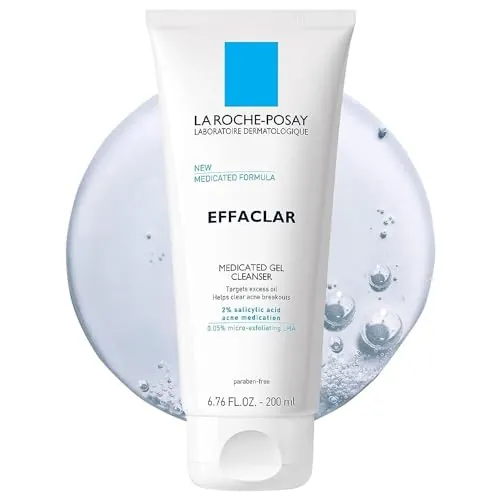
#1 Overall Winner
La Roche-Posay Effaclar Medicated Gel Cleanser
- Uses 2% salicylic acid and LHA in an oil-free gel cleanser.
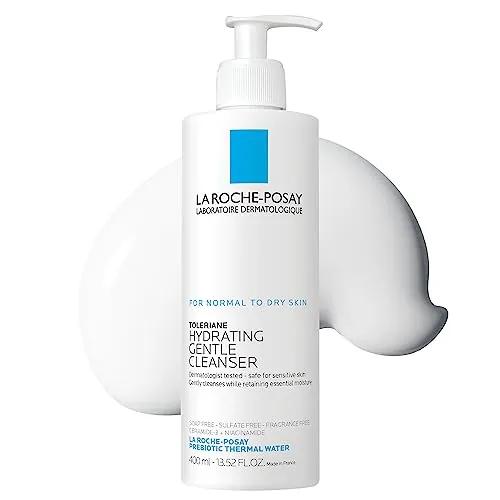
Comparison
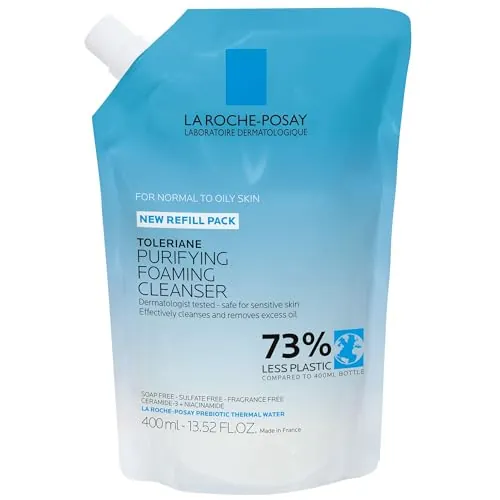
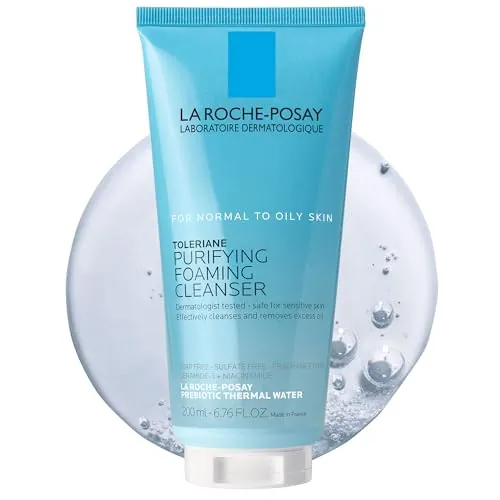
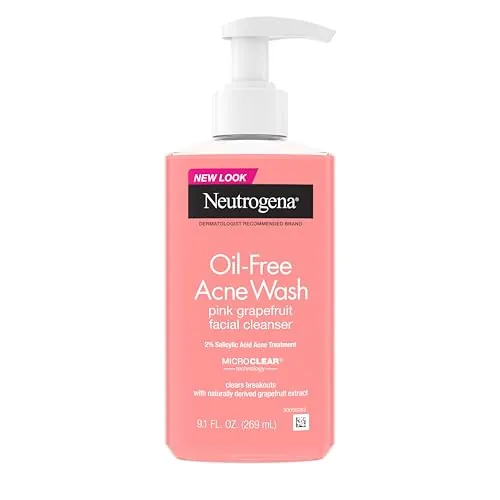
La Roche-Posay Effaclar Medicated Gel Cleanser is a foaming, salicylic-acid cleanser aimed at excess oil and breakout-prone skin. La Roche-Posay Toleriane Hydrating Gentle Face Cleanser is a creamy, fragrance-free daily cleanser designed for normal-to-dry, sensitive skin. Toleriane scores higher overall, while Effaclar is the more specific choice for shoppers who want 2% salicylic acid in their cleanse.
#1 Overall Winner
Contender
Choose Effaclar if you have oily skin and specifically want a foaming 2% salicylic acid cleanser for a more clarifying routine. Choose Toleriane if dry, normal, or sensitivity-prone skin needs a creamy daily cleanser that prioritizes comfort and hydration. Toleriane wins overall, but the formulas are not direct substitutes.
Overall winner
Depends on your needs
| Feature | La Roche-Posay Effaclar Medicated Gel Cleanser | La Roche-Posay Toleriane Hydrating Gentle Face Cleanser | Winner |
|---|---|---|---|
| Main formula focus | 2% salicylic acid + LHA foaming gel |
Ceramide-3 + niacinamide hydrating cream |
Depends |
| Listed skin fit | Oily, sensitive |
Normal-to-dry, sensitive |
Depends |
| Overall score | 82 |
87 |
La Roche-Posay Toleriane Hydrating Gentle Face Cleanser |
| Effectiveness score | 86 |
88 |
La Roche-Posay Toleriane Hydrating Gentle Face Cleanser |
| Skin compatibility score | 76 |
90 |
La Roche-Posay Toleriane Hydrating Gentle Face Cleanser |
| Comfort score | 78 |
90 |
La Roche-Posay Toleriane Hydrating Gentle Face Cleanser |
| Oil and congestion focus | High; salicylic acid and LHA |
Gentle cleansing focus |
La Roche-Posay Effaclar Medicated Gel Cleanser |
| Texture | Foaming gel |
Non-foaming cream |
Depends |
| Scent score | 76 |
96 |
La Roche-Posay Toleriane Hydrating Gentle Face Cleanser |
| Ease-of-use score | 87 |
91 |
La Roche-Posay Toleriane Hydrating Gentle Face Cleanser |
| Listed size and price | 6.8 fl oz; $18.99 |
13.52 fl oz; $19.99 |
La Roche-Posay Toleriane Hydrating Gentle Face Cleanser |
| Customer satisfaction score | 89 |
93 |
La Roche-Posay Toleriane Hydrating Gentle Face Cleanser |
Toleriane holds a narrow effectiveness advantage, scoring 88 versus Effaclar’s 86. That lead reflects its well-supported role as a gentle daily cleanser for normal-to-dry, sensitive skin, with buyers often reporting a clean but non-stripped result. Effaclar is more specialized: its 2% salicylic acid and LHA formula is intended to cleanse oily, congestion-prone skin and reduce excess surface oil. Reviews frequently support that fit, though some users experienced dryness, breakouts, or insufficient results. For daily gentle cleansing, Toleriane leads; for an active-led oil-control cleanse, Effaclar is more relevant.
Both cleansers earned the same beauty-result score of 84, but they create different immediate skin finishes. Effaclar is more likely to appeal to users who want a fresher, less oily feeling after cleansing; reviews frequently mention smooth, clean skin without residue. Toleriane is better suited to users seeking skin that feels soft, comfortable, and hydrated rather than deeply clarified. The better visible result depends on whether excess shine or post-cleanse comfort is the primary concern.
The products tie at 84 for beauty results, showing that neither has a universal edge in the final skin appearance. Effaclar’s foaming gel format and oil-targeting formula support a cleaner-looking, less shiny finish for appropriate skin types. Toleriane’s creamy formula favors a soft, comfortable, hydrated-looking finish, especially when a squeaky-clean feeling is undesirable. Neither score establishes a superior result without considering whether the user wants clarifying cleansing or moisture-preserving comfort.
Effaclar fits a skincare routine centered on oil control and a salicylic-acid cleanse, while Toleriane fits a routine that prioritizes a gentler daily wash. Both are listed as fragrance-free, non-comedogenic, allergy-tested, and dermatologist-tested. Because Effaclar can feel drying for some users, it may be sensible to use moisturizer afterward and adjust frequency if comfort declines. Toleriane may be a better fit when skin already feels dry or easily tight, although individual sensitivity can still occur.
Toleriane scores 84 for safety versus 78 for Effaclar. Both are face cleansers and should be kept out of the eyes and rinsed thoroughly. Effaclar’s 2% salicylic acid, LHA, and menthol make it important to watch for excessive dryness, tightness, or discomfort, particularly when beginning use or combining multiple active skincare products. Toleriane’s gentler profile is more favorable for daily comfort, but buyer feedback still includes occasional stinging and irritation. A patch test and gradual introduction can help users assess individual tolerance.
Toleriane is the clear comfort leader at 90, compared with Effaclar’s 78. Its cream texture is widely described as smooth, gentle, and non-stripping, with no strong fragrance. Effaclar’s gel lather is often praised for feeling fresh and clean, but its active, clarifying format can leave some users dry or tight. Choose Toleriane for a cushioned cleansing experience and Effaclar for a more cleansing-forward feel.
Both products are straightforward bottled facial cleansers, but Toleriane scores 91 for ease of use against Effaclar’s 87. Reviewers report that a single pump of Toleriane spreads and rinses easily, while its creamy formula is suited to uncomplicated daily use. Effaclar also lathers and rinses well, but its use may involve more routine judgment because some users need to reduce frequency or add moisturizer. Occasional leakage feedback also slightly reduces its practical advantage.
Toleriane leads application at 88 versus Effaclar’s 85. Its cream texture is described as smooth, easy to spread, and easy to rinse without residue. Effaclar’s gel also applies easily and foams well, producing a more traditional cleansing experience. The deciding factor is texture preference: Toleriane is better for a low-friction, creamy application, while Effaclar is better for users who want lather and a more clarifying cleanse.
Toleriane has a clear skin-compatibility lead at 90 compared with Effaclar’s 76. Its formula is expressly aimed at normal-to-dry, sensitive skin and includes ceramide-3, niacinamide, glycerin, and thermal water. Effaclar is listed as sensitive-skin tested, but 2% salicylic acid, LHA, and menthol can be less comfortable for some users; reviews include dryness and flaking concerns. Toleriane also has isolated reports of stinging or irritation, so a gentle profile does not eliminate the need to monitor personal tolerance.
Both cleansers score 82 for finish quality, but the preferred after-feel differs. Effaclar offers a foaming, fresh-clean finish that reviews often describe as smooth and residue-free; some users, however, find it too drying. Toleriane leaves a softer, more moisturized-feeling finish without foam, which many dry and sensitive-skin users prefer. Select Effaclar for a more clarifying feel or Toleriane for a less stripped finish.
Both products receive a longevity score of 72, so the supplied data does not identify a clear winner for lasting routine performance. For cleansers, this category is best read as how reliably the product remains useful and satisfactory over continued use, not as wear time on skin. Effaclar may require frequency adjustments if dryness develops, while Toleriane may need a separate first cleanse when heavy makeup is worn.
Toleriane leads scent performance at 96 compared with Effaclar’s 76. Both are listed as fragrance-free or unscented, but Toleriane is repeatedly described as nearly scentless. Effaclar contains menthol, and one buyer noted a menthol smell and cooling sensation. Users who avoid noticeable sensory additives may prefer Toleriane, while those comfortable with a cooling feel may not view Effaclar’s profile as a drawback.
Toleriane leads durability at 82 compared with Effaclar’s 75. As consumable cleansers, durability is most relevant to packaging reliability and continued usability rather than hardware life. Toleriane’s larger bottle and stronger packaging score support its advantage. Effaclar remains usable and well reviewed overall, but reports of leakage and the runnier formula reduce confidence in its container performance for travel or cap-down storage.
Toleriane scores 73 for personalization versus Effaclar’s 68 because its profile can accommodate a broad normal-to-dry, sensitive-skin daily-cleansing need. Effaclar is more narrowly tailored to oily and breakout-prone routines, which is helpful when that is the exact goal but less flexible for dry skin. Neither listing provides shade, scent, or size customization beyond the presented options. The most useful form of personalization here is matching texture and cleansing intensity to skin comfort.
Toleriane leads ingredient quality, scoring 86 to Effaclar’s 82. Its listing clearly identifies ceramide-3, niacinamide, glycerin, and thermal water in a fragrance-free, soap-free formula, aligning with its hydration-focused role. Effaclar also provides detailed disclosure and has a purposeful formula: 2% salicylic acid, LHA, glycerin, zinc gluconate, and cleansing agents support its oil-control positioning. However, its sodium laureth sulfate and menthol may be less appealing to users who know their skin dislikes a stronger or cooling cleanser. Ingredient preference should follow skin tolerance and goals rather than score alone.
Toleriane scores 80 for packaging quality, ahead of Effaclar’s 72. The Toleriane bottle receives positive feedback for practical dispensing and size, although the provided data does not establish perfection. Effaclar’s bottle is compact and functional, but reviews mention runniness and occasional leakage, especially when positioned cap-down. There are also isolated marketplace authenticity concerns, making seller selection worth checking.
Toleriane scores 84 for value, slightly ahead of Effaclar’s 82. At the listed prices, Toleriane costs $19.99 for 13.52 fluid ounces, while Effaclar costs $18.99 for 6.8 fluid ounces; this gives Toleriane a meaningful volume advantage. Its larger review base and strong satisfaction score also support the value case for a gentle everyday cleanser. Effaclar can still justify its price for shoppers who specifically value a 2% salicylic acid foaming cleanser. The better value depends on whether active oil-control cleansing is needed.
Toleriane has a small brand-trust lead, scoring 88 against Effaclar’s 86, though both products come from the same brand and share dermatologist-tested positioning. The difference is better understood as confidence in the individual product experience rather than a difference in company reputation. Effaclar’s isolated authenticity concerns in marketplace reviews make buying from a reliable seller especially relevant. Both have large review volumes and established product listings.
Toleriane leads customer satisfaction at 93 versus Effaclar’s 89. Both have a 4.6 out of 5-star average, but Toleriane has 38,430 reviews compared with 19,566 for Effaclar. Toleriane buyers repeatedly praise its gentle, hydrating, non-tight feel, though some mention stinging, breakouts, or limited heavy-makeup removal. Effaclar buyers often praise oil control, foam, and smoothness, while recurring concerns include dryness, flaking, leakage, and occasional breakouts. Both have strong overall buyer reception, with Toleriane more consistently comfortable.
Toleriane scores 86 for claim support, ahead of Effaclar’s 80. Its formula details and repeated buyer feedback are consistent with its daily gentle-cleansing and non-stripping positioning, though customer reviews do not replace clinical evidence. Effaclar provides a specific active concentration, 2% salicylic acid, and states a clinical test on surface oil reduction; its listing also clearly describes its oil-control and cleansing purpose. Results for breakouts vary in reviews, so neither product’s marketing language should be treated as a guarantee of individual outcomes.
Toleriane Hydrating Gentle Face Cleanser wins overall because it has stronger supplied scores for skin compatibility, comfort, ease of use, value, safety, claim support, and customer satisfaction. Its main strength is a creamy, fragrance-free formula that is widely praised for cleansing without tightness; its limitation is that it may feel too mild for oily skin or heavy makeup. Effaclar’s main strength is its focused 2% salicylic acid and LHA formula for a foaming, oil-control cleanse. Its limitation is that some users find it drying, and menthol may not suit everyone. Choose Toleriane for broad daily comfort and Effaclar when active-led cleansing is the priority.
Overall winner
Depends on your needs
Toleriane is the stronger overall choice on the supplied scores, particularly for skin compatibility, comfort, ease of use, and buyer satisfaction. Effaclar is the more targeted option for shoppers specifically seeking a foaming cleanser with 2% salicylic acid for excess oil and breakout-prone skin. The better choice depends mainly on skin feel and routine priorities.
Effaclar is the clearer fit for oily skin because it is an oil-free foaming gel formulated with 2% salicylic acid and LHA, and its listing specifically targets excess surface oil. Toleriane can cleanse combination skin, but its creamy, hydrating profile may feel less clarifying to users who want a more thoroughly cleansed finish.
Toleriane has the stronger supplied skin-compatibility score and is formulated for normal-to-dry, sensitive skin with ceramide-3, niacinamide, glycerin, and thermal water. Effaclar is tested on sensitive skin too, but its exfoliating active and menthol mean some users report dryness or tightness. Individual reactions can still vary.
Effaclar is the more breakout-focused formula because it contains 2% salicylic acid and LHA, while Toleriane is a gentle hydrating cleanser without those listed exfoliating actives. Reviews often describe Effaclar as helpful for oiliness and the appearance of clogged pores, but customer experiences are not proof of the same result for every user.
Toleriane is likely simpler for beginners who want a mild, fragrance-free daily wash with a creamy texture and minimal routine friction. Effaclar also scores well for ease of use, but a new user may need to monitor how often it is used and follow with moisturizer if dryness occurs. Avoid the eye area with either cleanser.
Toleriane has a slightly higher value score and is sold in a substantially larger 13.52-fluid-ounce bottle for a listed price only one dollar above Effaclar’s 6.8-fluid-ounce bottle. Effaclar can still represent good value for users who specifically want its 2% salicylic acid formula and do not need a larger hydrating cleanser.
The listing says Toleriane cleanses dirt, makeup, and impurities, and some buyers report that it removes makeup well. However, other feedback says it may not be enough for heavier makeup. It may work best as a gentle second cleanse after a dedicated makeup remover or cleansing balm when heavier products are worn.
Both listings identify the products as unscented or fragrance-free. Effaclar does list menthol, and one review notes a menthol smell and cooling feel, so fragrance-free does not necessarily mean every user will perceive no scent or sensation. Toleriane has the higher scent score and is more consistently described as nearly scentless.
Check our rankings and expert guides to find the best beauty products for your goals.